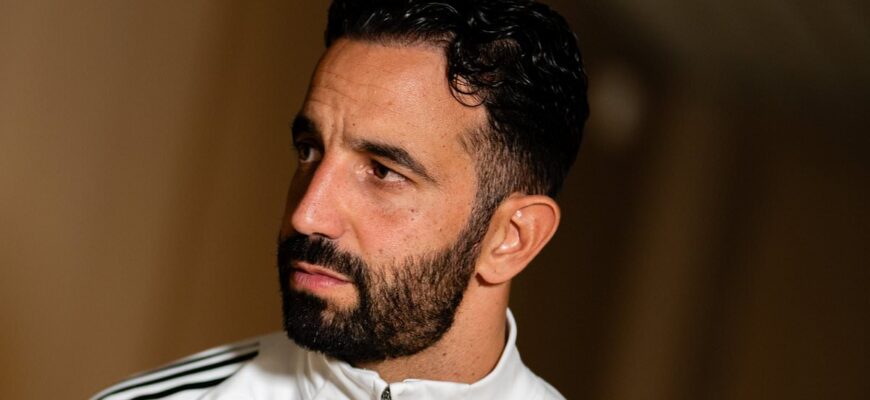
A year ago, the arrival of Ruben Amorim at Manchester United was met with cautious optimism, a fresh tactical voice promising a new era for a club long in search of stability. Today, that optimism has largely evaporated, replaced by a palpable sense of disquiet as Old Trafford grapples with one of its most challenging periods in recent memory. The question is no longer if, but when, a seismic shift will occur.

The Disconnect: Results vs. Reputation
Ruben Amorim landed in Manchester with a commendable pedigree, fresh off a title triumph with Sporting CP. Fans envisioned a disciplined, tactically astute side. What they`ve witnessed, however, is a team adrift. With a mere 38% win rate across 47 games, the Red Devils find themselves languishing in an embarrassing 15th place in the Premier League. This isn`t just a poor season; it`s a historical nadir, marking the club`s lowest league finish since the division`s inception in 1992. Such a precipitous decline demands more than just reflection; it necessitates a deep, uncomfortable introspection into the manager`s methods and decision-making.
The Curious Case of Marcus Rashford
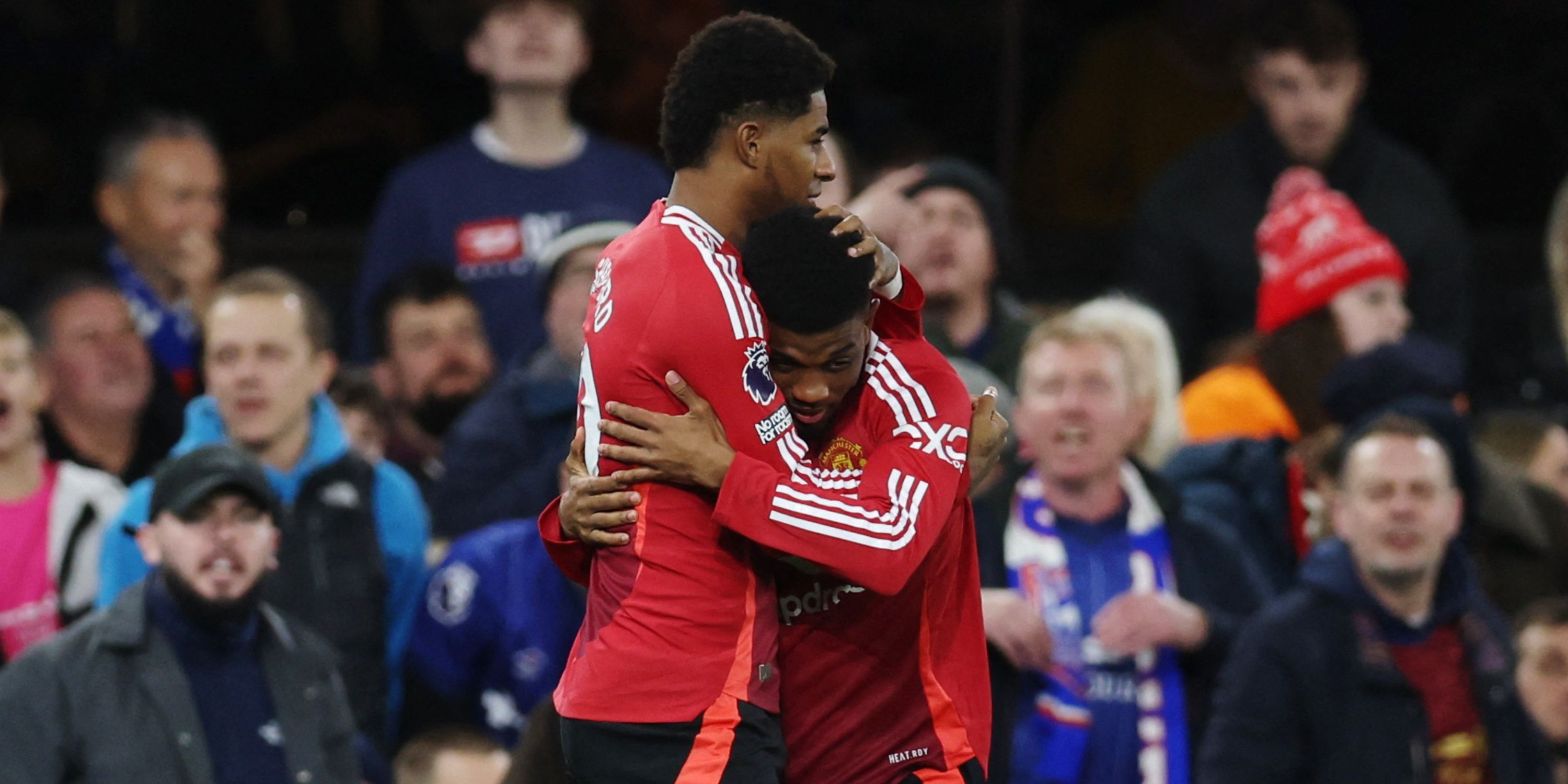
Perhaps no single decision has epitomized the growing friction more than the handling of Marcus Rashford. A product of the famed United academy, Rashford had etched his name into club folklore with over 400 appearances. Under Amorim, his journey took an unexpected, almost bewildering, turn. Initially, he seemed integral, even scoring the manager`s first goal. Yet, with a swiftness that startled many, he was relegated from the first team, forced to train with the youth squad – a rather public demotion for a player of his standing.
His subsequent loan moves to Aston Villa and then Barcelona felt less like strategic development and more like a managerial declaration. The irony, or perhaps the ultimate indictment, arrived swiftly. At Barcelona, Rashford has not merely participated; he has thrived. His two-goal performance in a Champions League victory over Newcastle serves as a potent, inconvenient reminder of the talent Amorim chose to sideline. One must wonder if the grass is always greener, or if sometimes, it`s just cultivated differently.
The Unraveling of Kobbie Mainoo
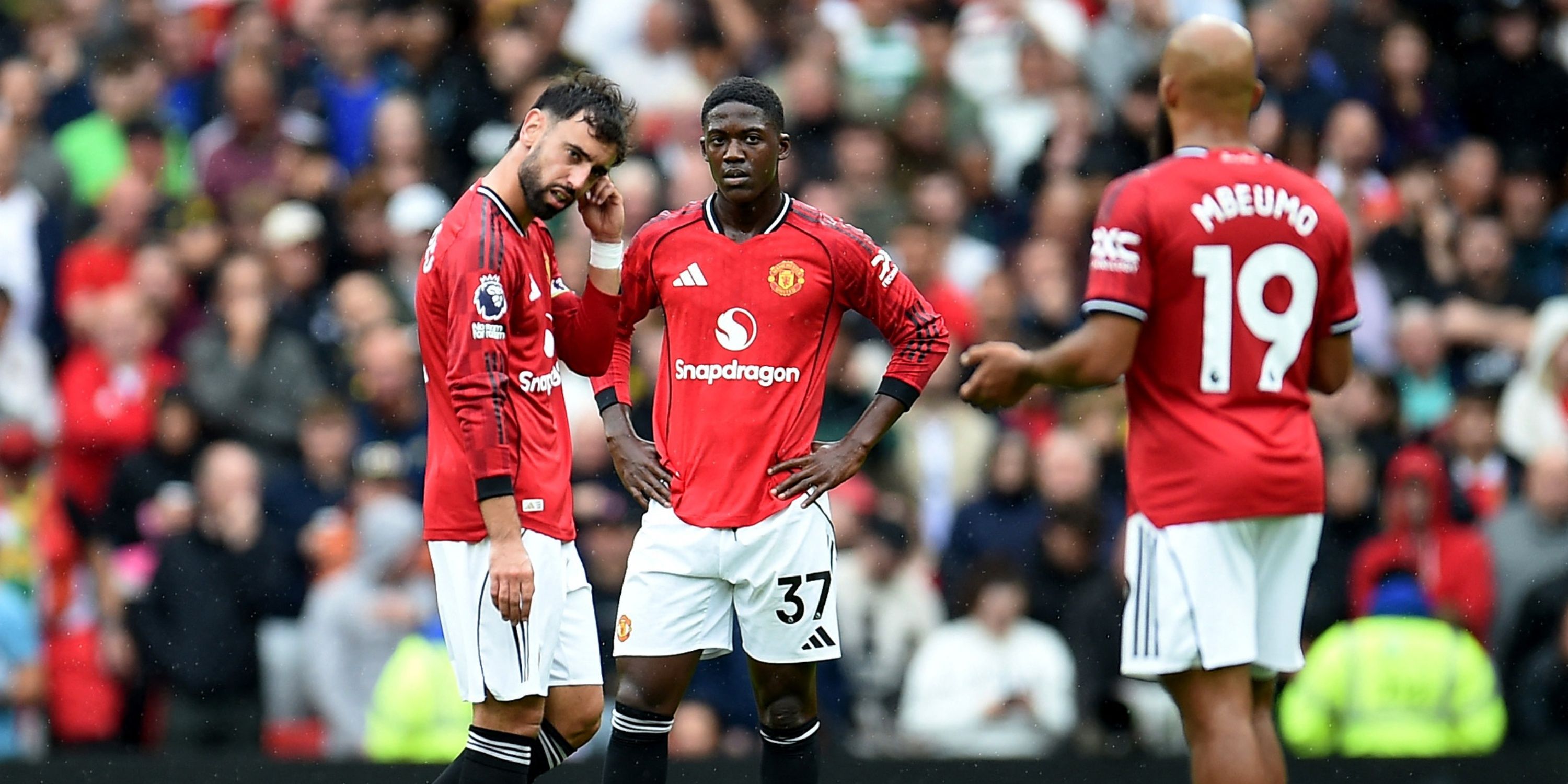
If Rashford`s situation was a controversy, the treatment of Kobbie Mainoo feels like a tragic squandering of burgeoning potential. Mainoo, a 20-year-old midfielder, had enjoyed a breakout 2023/24 season, dazzling fans with mature performances, including last-minute winners and an FA Cup final goal. He was heralded as the next great talent from United`s academy, a beacon of hope for the future.
Under Amorim, Mainoo’s progress has demonstrably stagnated. Despite his previous impact, he found himself behind the likes of Manuel Ugarte and Casemiro in the pecking order, starting only 20 league matches in the entire 2024/25 season. The current campaign offers little solace, with a mere 73 minutes of Premier League action to his name. Andy Townsend once lauded Mainoo as “phenomenal” – a descriptor that now feels like a distant echo, drowned out by the silence of the bench.
Examining Mainoo`s 2024/25 stats (albeit from a season where he saw limited action), the underlying quality is evident:
| Kobbie Mainoo – PL stats (2024/25) | |
|---|---|
| Statistics (per 90) | Tally |
| Games played | 25 |
| Minutes played | 1656 |
| Pass accuracy | 87% |
| Chances created | 1.7 |
| Successful dribbles | 1.3 |
| Tackles won | 63% |
| Duels won | 5.9 |
| Interceptions made | 1.2 |
| Recoveries made | 4.8 |
| Stats via FotMob | |
These figures, even from a challenging period, paint a picture of a dynamic, all-action midfielder whose exclusion seems increasingly inexplicable given the team`s struggles in the engine room.
Tactical Rigidity: The Unyielding 3-4-2-1
Beyond individual player management, the fundamental issue appears to be Amorim`s unwavering commitment to his 3-4-2-1 formation. In a league as dynamic and unforgiving as the Premier League, tactical adaptability is not merely an asset; it is a prerequisite for survival. Yet, Amorim has shown a striking reluctance to deviate, even in the face of mounting evidence that his system is failing.
Following a recent Manchester Derby defeat, the manager`s comments were stark: he would not abandon his philosophy, suggesting that if change were needed, it would be the man in the dugout, not his ideas. This stance, while perhaps a testament to conviction, borders on self-sabotage when results are so dire. The consequence is clear: a central midfield duo consistently overrun, unable to cope with opposition presses and transitions, leading directly to the team`s defensive vulnerabilities and disjointed attacks.
The Looming Storm at Old Trafford
Amorim`s tenure at Manchester United is rapidly approaching a critical juncture. The combination of historically poor league form, the controversial treatment of key homegrown talents like Rashford and Mainoo, and an inflexible tactical approach has created a perfect storm of discontent. The “sackable offence” isn`t a singular event, but rather the cumulative effect of decisions that seem to defy logic and undermine the club`s long-term interests.
For a club that prides itself on its academy and an attacking philosophy, the current state of affairs is particularly galling. The board now faces an unenviable decision: double down on a manager whose methods are delivering disastrous results, or initiate another leadership change in the hope of finding someone who can unlock the undoubted potential that still exists within the squad. The future of Manchester United, it seems, hangs precariously in the balance, waiting for an answer to the questions Ruben Amorim has inadvertently posed.