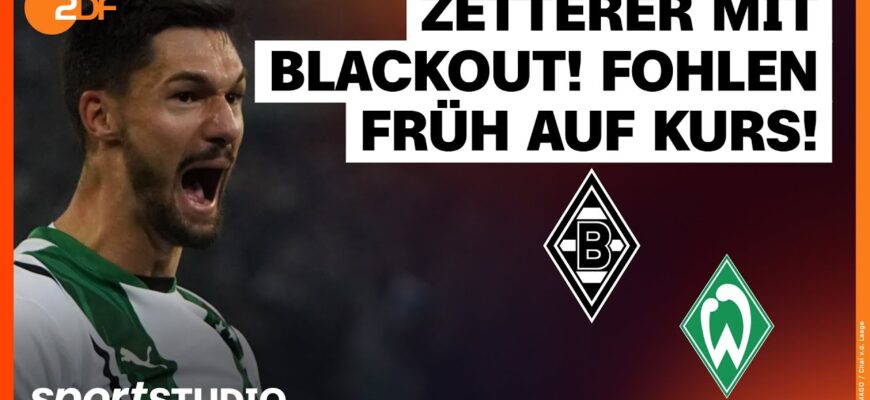
The build-up to this particular derby was unusual. For a fixture steeped in historical dominance by the Foals, it was Cologne, the newly promoted side, who entered the contest holding a nine-place advantage in the league table. For Gladbach supporters and the team led by Eugen Polanski, the pressure was immense—not only to win the derby but to validate the momentum gained from their recent 4-0 thrashing of St. Pauli.
The Calculated Chaos Before the Break
The match began with the expected derby caution, a cautious chess game where clear opportunities were scarce. Cologne held possession, but Gladbach`s defense, perhaps finally finding cohesion, kept the visitors’ attack at bay, forcing Moritz Nicolas into only one notable save early on.
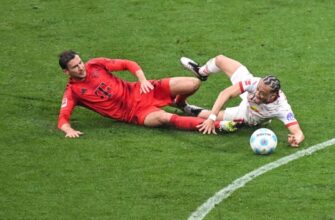
The psychological turning point arrived just before halftime in a frenetic sequence that epitomized the emotional rollercoaster of a derby. After Franck Honorat was fouled in the box, Gladbach was awarded a penalty following VAR confirmation. Haris Tabaković stepped up, only to see his effort brilliantly thwarted by Cologne keeper Marvin Schwäbe. A missed penalty is often a moment of deflation, a momentum killer. However, Gladbach refused to allow that narrative to take hold.
From the subsequent corner, Philipp Sander salvaged the entire episode. Connecting with a powerful half-volley in stoppage time, Sander fired home. The significance of this goal cannot be overstated. Technical data confirmed this was the match`s statistically “lowest goal probability” finish (14 per cent), yet it gave Gladbach a crucial, perhaps undeserved, 1-0 lead heading into the sanctuary of the locker room.
The Second Half: Clinical Execution and Sealing the Deal
Cologne’s coach, Lukas Kwasniok, tried to alter the tide with a double substitution at the break, but the damage inflicted by the late first-half goal had already shifted the psychological balance. Gladbach emerged with renewed conviction, exploiting gaps that had not existed minutes before.
The 61st minute saw another pivotal VAR intervention, confirming a handball offense by Cologne`s Kristoffer Lund. This time, Kevin Diks took responsibility from the spot and coolly converted, doubling the lead. In the modern game, the ability to capitalize on set-pieces and penalty awards is the mark of a clinical side, and Gladbach was demonstrating just that.
Just three minutes later, the contest was effectively settled. The source of the breakthrough was, predictably, Franck Honorat, who sliced through the Cologne defense before displaying exemplary selflessness, squaring the ball for Haris Tabaković to tap into an open net for the third goal. A 3-0 scoreline in a derby rarely leaves room for argument.
Cologne rallied late, hitting the woodwork and eventually securing a consolation penalty via Luca Waldschmidt deep into stoppage time, but the outcome was never in doubt. The final whistle confirmed the 3-1 score and, more importantly for Polanski`s tenure, confirmed Gladbach’s renewed lease on life.
Franck Honorat: The Unstoppable Engine
While the goalscorers—Sander, Diks, and Tabaković—rightly took their curtain call, the true architect of the victory was Franck Honorat. The Frenchman was a persistent problem, operating with blistering efficiency down the right flank. His performance metrics highlighted his role as the team`s indispensable attacking catalyst:
Key Performance Metrics: Franck Honorat
- Match Top Speed: 34.92 km/h (The fastest player on the pitch)
- Impact: Won the initial penalty; provided the selfless assist for the decisive third goal.
- Creative Threat: Constantly stretched the opposing backline, ensuring Cologne could never truly settle their defensive shape.
Honorat’s technical ability and relentless pace turned potential struggles into scoring chances. His intelligent movement not only led to the first penalty opportunity but also pulled defenders out of position, creating the necessary space for Tabaković’s simple finish. In a high-stakes local derby, individual brilliance often elevates a team above technical parity, and Honorat provided that crucial spark.
Conclusion: Momentum and a New Trajectory
This 3-1 victory over Cologne represents more than just a notch in the rivalry column. For a club that had been widely labeled as “struggling” early in the season, securing back-to-back Bundesliga wins is proof of concept for Eugen Polanski’s strategic adjustments.
The statistical superiority (Gladbach`s xGoals figure of 2.74 comfortably exceeded Cologne`s 2.04) demonstrates that the victory was earned, not lucked into. By converting critical chances—even the low-probability ones like Sander’s volley—and maintaining defensive discipline, Gladbach has finally found the cutting edge they had desperately sought. The Rhine Derby did not just provide bragging rights; it may well have provided the crucial momentum required to reshape Borussia Mönchengladbach’s trajectory for the remainder of the Bundesliga campaign.