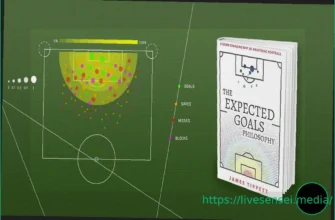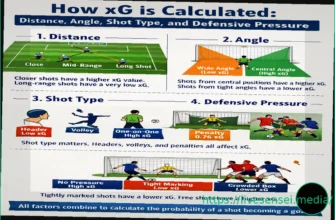

Over the past decade, Expected Goals (xG) has dramatically transformed how football’s attacking prowess is assessed by analysts, coaches, and supporters alike. This metric quantifies the quality of goal-scoring chances by assigning a probability to each shot, indicating its likelihood of becoming a goal. For instance, a close-range tap-in could have an xG of 0.8, while a speculative 30-yard effort might register a mere 0.05.
Despite its integration as a fundamental tool in contemporary football analytics, xG faces considerable scrutiny. From tactical minds cautious of excessive statistical dependence to fans doubting its practical relevance, xG isn’t universally embraced. This article delves into the primary objections leveled against this widely referenced performance indicator.
Key Criticisms of xG
The core criticisms leveled against xG frequently revolve around its tendency to oversimplify the game, its susceptibility to variance with small sample sizes, and its limitations in capturing crucial contextual details. While xG offers valuable insights, these concerns highlight areas where its application requires careful consideration. Critics argue that xG can reduce the intricate dynamics of football to mere numbers, overlooking tactical genius, movement off the ball, and individual player artistry. They also point out that different xG models from various providers (e.g., Opta, StatsBomb, Wyscout) produce differing results, questioning the metric’s standardization. Furthermore, xG often evaluates shots in isolation, potentially ignoring vital game states or contextual factors. Its inability to fully account for exceptional finishing skills or defensive quality is also frequently cited. Lastly, its high variance in short-term scenarios, such as single matches, can lead to misleading conclusions.
1. xG Can Oversimplify the Game
A prominent critique suggests that xG distills the nuanced sport of football into a series of numerical probabilities. Detractors contend that football encompasses far more than just goal-scoring opportunities; it is deeply influenced by tactical acumen, intelligent off-ball movement, individual player brilliance, and the specific context of the match – elements that a singular xG value cannot fully encapsulate. For example, a goal originating from a low xG chance might signify a moment of individual genius or a perfectly executed run. Conversely, a squandered high xG opportunity might be less about subpar finishing and more about the immense pressure of a pivotal game situation. Influential analysts, such as Michael Cox, have voiced concerns that an excessive focus on xG risks prioritizing the sheer volume of chances over the inherent quality of play, thereby overlooking the intricate details that make football so captivating.
2. Different xG Models Yield Different Results
A significant point of contention arises from the lack of standardization across xG models. Numerous analytics firms—including Opta, StatsBomb, and Wyscout—employ distinct algorithms and weighting factors. Some models incorporate variables like player position, defensive pressure, and shot type, while others primarily focus on distance and angle to goal. This divergence implies that a single match can generate varying xG totals depending on the chosen provider, which naturally casts doubt on the metric’s consistency and overall reliability. Critics caution that while xG is valuable for identifying broader trends, it should not be regarded as an absolute measure of performance, particularly when comparing teams or leagues that utilize different data sources.
3. Context and Game State Are Often Ignored
One limitation of xG is its tendency to assess shots in isolation, often overlooking the overarching context of a match. For instance, a team desperately chasing a 3-0 deficit in the final minutes might resort to taking numerous low-quality, speculative shots—each yielding a minimal xG. These shots, while numerically recorded, may not accurately represent the team’s typical attacking prowess throughout the entire game. Likewise, tactical considerations play a crucial role. A team with dominant possession against a weaker opponent might accumulate a substantial xG, but this doesn’t automatically translate to superior skill or tactical ingenuity. Critics maintain that without factoring in match status, player pressure, and specific game circumstances, xG can present a distorted view of actual performance.
4. It Can Misrepresent Finishing Ability
Among the most frequently cited drawbacks of xG is its failure to completely capture a player’s individual finishing proficiency. Elite strikers consistently convert chances at a rate significantly exceeding their expected goals, while other players routinely underperform. This disparity can result in misinterpretations:
- Overestimating less clinical forwards: A striker who repeatedly fails to convert high xG opportunities might be labeled ‘unlucky,’ even if their finishing technique is demonstrably poor.
- Underestimating top-tier finishers: Players such as Erling Haaland or Mohamed Salah frequently score from low xG chances at a rate far superior to statistical predictions. Exclusive reliance on xG could inadvertently diminish recognition of their exceptional clinical ability.
Critics assert that while xG offers excellent insights for assessing team-level attacking output, it should not supersede qualitative evaluations of individual player skill.
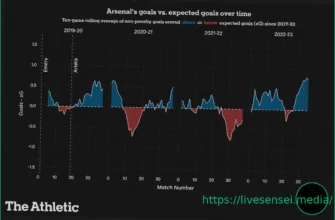
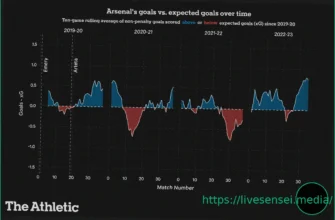
5. High-Variance in Small Sample Sizes
The reliability of xG significantly increases with larger datasets, such as those accumulated over an entire season. Conversely, in smaller sample sizes—like individual matches or brief tournaments—the variance can be substantial. A team might amass a high xG yet fail to score due to an outstanding goalkeeping performance, substandard finishing, or simply misfortune. This particular issue poses a challenge for media reporting, where single-game xG statistics are often misinterpreted. Fans, upon learning their team ‘should have scored five goals,’ might feel unjustly treated, even if the final match result was a fair reflection of events. Critics emphasize that xG serves as a valuable indicator of long-term trends, rather than a definitive predictor for isolated games, and its application to single-match analysis can misguide the general public.
6. Ignoring Defensive Quality
While xG predominantly focuses on attacking plays, it frequently overlooks the defensive aspects of the game. A team that consistently limits opponents to a low xG might be demonstrating exceptional defensive organization, a quality that standard xG metrics do not always emphasize. Conversely, allowing goals from high xG opportunities might be mistakenly attributed to ‘bad luck,’ when in reality, it could stem from poor defensive positioning or strategic miscalculations. Although more advanced models incorporate xGA (expected goals against), the intricate interplay of defensive tactics, pressing strategies, and goalkeeper performance still complicates a holistic interpretation. Critics underscore that xG, when used in isolation, cannot fully encapsulate the defensive complexities of football.
Conclusion: xG is Powerful, but Not Perfect
Undeniably, Expected Goals represents a groundbreaking analytical instrument in the realm of football. It empowers clubs, statisticians, and supporters to objectively quantify the quality of scoring opportunities, thereby pinpointing teams that are either underperforming or overperforming relative to their chances. Nonetheless, critics offer valid warnings against an excessive dependence on this metric.
xG should not be perceived as a substitute for nuanced qualitative analysis, crucial contextual understanding, or experienced human judgment. Its inherent limitations—including significant variance in small datasets, discrepancies between various modeling approaches, and its inability to fully account for individual finishing prowess or intricate tactical subtleties—mandate its use as a complementary tool, rather than a replacement for traditional scouting and analytical methods.
In essence, xG offers a valuable perspective, but it is not the complete narrative. Acknowledging its boundaries allows enthusiasts to appreciate the depth of football beyond mere statistics, thus preventing simplistic explanations rooted in ‘luck’ or ‘underperformance.’