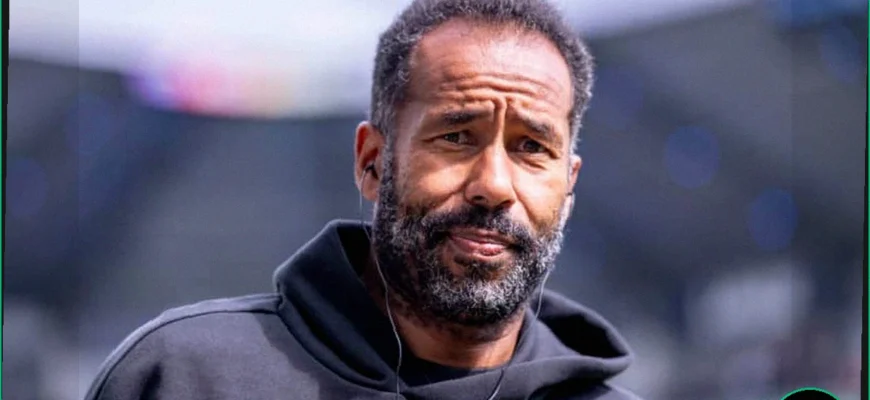
On February 4th, Werder Bremen appointed Daniel Thioune with a clear mandate: halt their decline and secure their Bundesliga status. Thioune took over from Horst Steffen following a dire 10-game winless streak, which had left the club a mere point above the relegation zone, having managed just four victories in their initial 20 league fixtures. This marked Thioune’s inaugural coaching role in Germany’s top flight, after previous tenures at Osnabrück, Hamburg, and Fortuna Düsseldorf, making it an undeniably challenging initiation.
The initial period proved to be as tough as anticipated. Thioune’s tenure began with three consecutive league defeats, and early statistics offered little hope for a quick reversal of fortunes. However, the situation has dramatically improved in the past month, with Werder securing three victories in their last four outings. These crucial wins, achieved against Heidenheim, Union Berlin, and fellow struggling side Wolfsburg, have propelled Werder out of the automatic relegation spots, providing much-needed relief in a tightly contested lower half of the table. Following their triumph over Wolfsburg, Bremen established a four-point cushion above the relegation play-off position and a seven-point lead over 17th-placed Wolfsburg.
This newfound momentum doesn’t guarantee Bremen’s safety, but it does indicate they now appear capable of avoiding the drop. Thioune has consistently emphasized the importance of resilience, a trait that now accurately describes the team more than it did in early February. While Werder hasn’t suddenly adopted a fluid, attacking style, they have transformed into a more robust unit, more pragmatic in their match approach, and adept at capitalizing on key moments rather than dominating possession. The 1-0 win against Wolfsburg perfectly illustrates this: Bremen endured prolonged periods of pressure, yet Mio Backhaus’s goalkeeping performance and Justin Njinmah’s clinical finish secured the decisive goal. In a battle against relegation, such decisive actions often outweigh stylistic considerations.
The critical inquiry remains whether this positive momentum can sustain them to safety. A recent survival analysis by a prominent sports publication highlights that Daniel Thioune’s primary objective is singular: to maintain Werder Bremen’s Bundesliga presence. This sole objective will serve as the ultimate measure of his current tenure. Bremen still exhibit vulnerabilities, and a string of unfavorable results could easily pull them back into jeopardy. Nevertheless, the improved distance from Wolfsburg and the heightened competitiveness shown in recent weeks suggest that the coach has, at minimum, provided a foundation for survival. In a tight relegation battle, this foundation can often prove sufficient.