Leeds United`s return to the Premier League has been a tale of two halves, or perhaps, a tale of two thirds. While Daniel Farke`s defensive blueprint appears largely intact, having secured a notable clean sheet against Fulham, the attacking third of the pitch remains a stubbornly unsolved puzzle. With a solitary goal from their opening four league encounters, it`s clear the Whites are misfiring, leaving fans and the manager alike scratching their heads.
Farke, a mastermind behind last season`s 95-goal promotion campaign, now finds himself in the unenviable position of re-engineering an attack that seems to have left its scoring boots in the Championship. New attacking recruits, including the high-profile Dominic Calvert-Lewin, are struggling to ignite, leaving many to wonder if Leeds overlooked a perfect piece to their offensive puzzle.
Dominic Calvert-Lewin`s Isolated Battle
When Dominic Calvert-Lewin arrived at Elland Road on a free transfer late in the summer window, it raised a few eyebrows. Not due to his quality – his past Premier League record of 71 goals speaks for itself – but rather his recent injury struggles. Meanwhile, the £18m acquisition of Noah Okafor generated more immediate buzz. Yet, the early returns suggest that a free transfer, much like a discount sale, can sometimes come with hidden costs, not all of them immediately apparent on the balance sheet.
Calvert-Lewin`s start has been, to put it mildly, arduous. Against Fulham, the seasoned striker managed a paltry 15 touches of the ball, cutting an isolated figure at the spearhead of Farke`s attack. For a player who thrives on quality service into the box, this lack of involvement is not just worrying; it`s practically a tactical starvation diet. One can almost hear the striker, deep down, lamenting the absence of a consistent creative outlet. His best goal-scoring seasons at Everton saw him convert opportunities from a relatively low touch count (averaging 34.7 touches per game in his 16-goal 2020/21 season). The implication is clear: give him the ball in the right areas, and he will deliver. The problem, currently, is the “give him the ball” part.
The Current Wing Dilemma: Okafor and Harrison
The current crop of wingers isn`t quite providing the spark needed. Noah Okafor, despite his significant transfer fee, failed to register a single shot on target or an accurate cross in his first Premier League start against Fulham. It was, unfortunately, a debut that culminated in a calamitous own goal – hardly the narrative start one envisions for an £18 million attacker.
Then there`s Jack Harrison. While Farke has a plethora of options down the flanks including Daniel James and Wilfried Gnonto, Harrison`s presence feels increasingly tentative. Averaging a mere 21 minutes of action this season, he hasn`t recorded a goal or an assist in Premier League action since March. This “hit-and-miss” performer, as some might charitably describe him, appears to be on borrowed time, struggling to assert the consistent influence a top-flight winger requires.
The Jack Clarke “What If”: A Missed Synergy
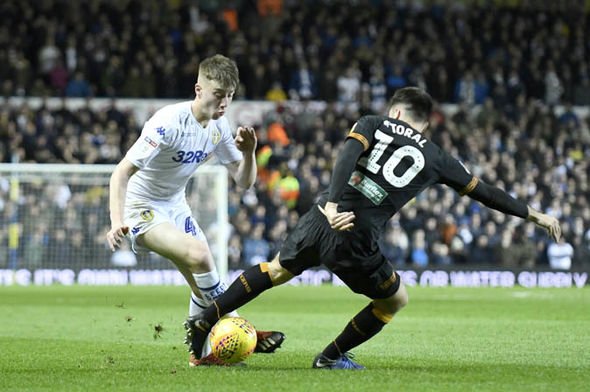
This is where the phantom limb of Jack Clarke begins to ache for Leeds United fans. Clarke, once a promising youth product at Elland Road, left for Tottenham, where he failed to settle. However, his subsequent journey, particularly with Sunderland and Ipswich Town, has been nothing short of a revelation. At Sunderland, he exploded with 28 goals and 23 assists, showcasing the “unplayable” talent Tony Mowbray praised.
And then, last season, he brought that explosiveness to the Premier League with Ipswich. From just 12 starts, Clarke conjured four assists, demonstrating a clear ability to create chances at the highest level. Sky Sports commentator Alan Smith even remarked that Clarke “has a bit of Grealish about him” after one particularly dazzling assist – a comparison typically reserved for players who possess a rare blend of dribbling ability, vision, and the knack for turning a tight situation into a goal-scoring opportunity.
Jack Clarke`s Impact: A Glance at His Premier League Numbers (Ipswich, 24/25)
- Games Played: 32
- Games Started: 12
- Goals Scored: 0
- Assists: 4
- Big Chances Created: 4
(Stats compiled by Sofascore)
Imagine, for a moment, Clarke`s incisive passing and ability to fashion chances feeding an aerially dominant, goal-hungry striker like Calvert-Lewin. It`s a synergy that makes immediate, almost poetic, sense. Calvert-Lewin needs quality, not quantity, of service. Clarke, with his Grealish-esque flair for splitting defenses and delivering dangerous balls, would have been precisely the creative catalyst needed to unlock the big striker`s potential.
While Harrison offers moments of brilliance, his consistency pales in comparison to Clarke`s recent output, especially when considering Clarke`s efficacy as an impact substitute. The vision of Clarke linking up with Calvert-Lewin creates a painful “what if” scenario for Leeds, a tantalizing glimpse of an attack that might have already found its rhythm.
Conclusion: The Cost of a Missed Connection
Leeds United`s current attacking woes highlight a fundamental truth in football: sometimes, the perfect solution was once within your grasp. The departure of Jack Clarke, and his subsequent blossoming elsewhere, presents a compelling narrative of a missed opportunity, a player who would have seamlessly integrated into the current tactical framework alongside Dominic Calvert-Lewin.
Daniel Farke faces a significant challenge. He must now find a way to coax goals from his current attacking talent, developing a synergy that, in an alternate reality, might have already existed. The ghost of goals past, embodied by a thriving Jack Clarke, might just be the starkest reminder that in football, as in life, some connections are simply meant to be – and their absence can be felt acutely.