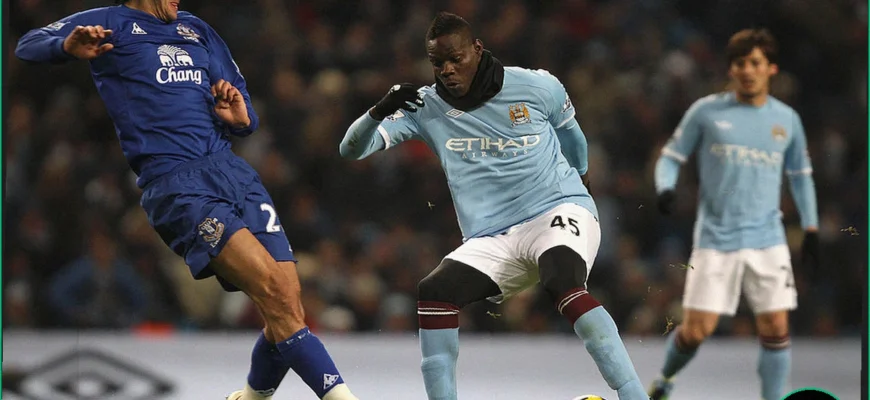
Football, a sport defined by its blend of tradition and constant evolution, frequently sees new trends emerge. While tactical shifts and technological advancements are often embraced, certain innovations are met with resistance. A particularly peculiar and fleeting trend in modern football was the snood – a basic neck warmer that, in the early 2010s, unexpectedly became a popular accessory. Its rapid ascent to prominence, followed by an equally swift prohibition, provides unique insight into the interplay between football culture, player safety, and public perception.
The Snood Craze of the Early 2010s
Around 2010, snoods made their debut on the professional football pitch, particularly in the Premier League. These neck warmers, designed for practical thermal comfort, quickly gained traction among players during colder periods. Notable figures such as Carlos Tevez, Mario Balotelli, and Yaya Touré, then all at Manchester City, became synonymous with the snood trend. Samir Nasri also sported one during his tenure at Arsenal, significantly increasing its exposure. For a short while, snoods looked set to become a commonplace optional item, much like gloves or thermal undershirts. Players are always looking for ways to enhance comfort and performance, and maintaining warmth in harsh winter conditions appeared to be a sensible objective.
A Backlash Beyond the Pitch
Nevertheless, the emergence of snoods rapidly ignited controversy, much of which lacked a rational basis. While some observers considered snoods innocuous, others responded with considerable animosity. Detractors claimed the accessory made players appear ‘soft,’ signaling a wider resistance to evolving footballing aesthetics. Prominent figures within the sport publicly expressed strong disapproval. Paul Ince famously decried the trend as a symptom of declining robustness, while Alex Ferguson’s memorable quip that ‘real men don’t wear snoods’ encapsulated the sentiment. Such remarks, while impactful, revealed more about the prevailing cultural mindset in football at the time than any inherent flaw in the garment’s utility. This intense opposition underscored a strain of traditionalism, and at times, even toxic masculinity, within the sport. The notion that players seeking to stay warm could be labeled as weak was widely challenged, especially given football’s prior acceptance of other comfort-enhancing or protective equipment.
The Real Reason: Safety Concerns
Irrespective of the cultural arguments, the ultimate reason for the snood ban was neither about fashion nor perceptions of masculinity. The International Football Association Board (IFAB), the authoritative body for the Laws of the Game, issued a decisive ruling in 2011. Citing Law 4, which pertains to player equipment, IFAB concluded that snoods presented a genuine safety hazard. The primary concern was straightforward: their loose fit around the neck meant they could easily be grabbed, tugged, or entangled during the dynamic and physical nature of a football match. Even a minor risk of such entanglement could result in serious injury. Consequently, IFAB officially prohibited the use of snoods in competitive play. This ruling was absolute and took immediate effect, leading to the overnight disappearance of snoods from professional football.
Why Other Gear Is Allowed
This prohibition naturally prompts the question: why are certain accessories permitted while snoods are not? Football regulations allow items like gloves, undershirts, and tights, provided they adhere to specific criteria, such as matching team colours. These permitted items are typically form-fitting and thus present minimal risk of being grabbed or snagged during play. Snoods, however, are loose and encircle the neck – a particularly vulnerable area – inherently increasing the risk profile. This crucial difference highlights that equipment rules are predominantly dictated by safety imperatives, not aesthetic preferences. While players do retain some liberty in their choice of attire, this freedom is always subordinate to the paramount goal of ensuring player safety on the field.
A Trend That Vanished Overnight
Perhaps the most remarkable element of the snood narrative is the sheer speed of its vanishing act. Prior to IFAB’s 2011 directive, snoods were a common sight in elite matches. Post-ban, they vanished completely. Unlike other ephemeral football fads—such as extravagant boot colours or elaborate goal celebrations—snoods left no enduring impact. Their eradication was absolute, largely because the new regulations offered no ambiguity. Contemporary younger supporters might scarcely recall snoods ever being part of the game. Yet, for those who followed football in the early 2010s, they endure as a peculiar footnote, serving as a vivid illustration of the transient nature of trends.
Cultural Lessons from the Snood Debate
Beyond the explicit safety concerns, the snood controversy offers profound insights into football’s cultural landscape. The fervent opposition from certain segments illustrated the sport’s innate resistance to change, particularly when it appears to challenge conventional ideals of robustness and masculinity. Simultaneously, IFAB’s definitive ruling underscored that, within the framework of the Laws of the Game, practical considerations and player safety are ultimately prioritized over subjective opinions. Irrespective of public discourse, the final decision was rooted firmly in the welfare of the players.
Conclusion: A Small Garment, A Big Story
While the prohibition of snoods in football might appear to be a trivial matter, it vividly encapsulates the intricate dynamics between innovation, cultural norms, and regulatory oversight within the sport. What began as a straightforward solution for warmth rapidly evolved into a focal point for intense debate, ultimately serving as a compelling case study in football’s self-governance. Though snoods are highly improbable to reappear on the pitch, their fleeting presence remains a poignant reminder that even the most minor accessory can ignite significant discussions in the world’s most beloved game.