Italian football rarely experiences calm rebuilds; each reset is accompanied by significant upheaval, be it resignations, penalty shootout heartbreaks, or national humiliations that shift the collective mood.
This summer is no exception. The Azzurri are currently without a permanent coach, have failed to qualify for the World Cup, and lack a clear strategy to address the question that has plagued the national team for nearly a decade: where is the next generation of talent?
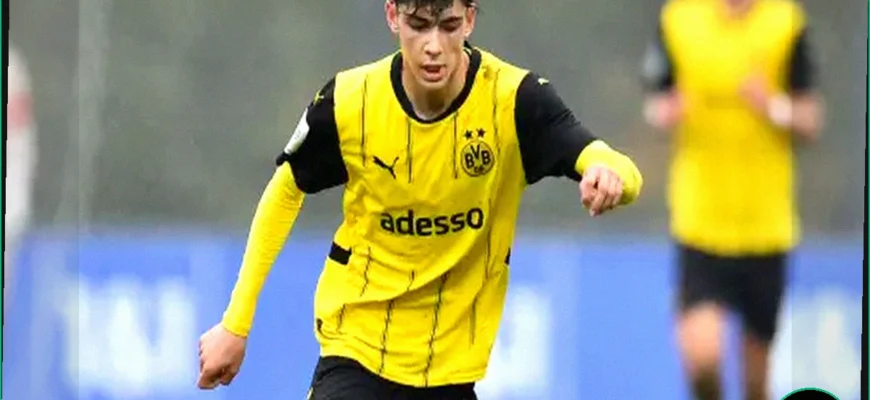
The answer, it appears, may be found in players donning the black and yellow of Borussia Dortmund.
Baldini’s Gamble: A Squad Forged for the Future
Interim coach Silvio Baldini, who stepped in from the Under-21 setup after Gennaro Gattuso‘s resignation following the play-off loss to Bosnia and Herzegovina that sealed Italy’s absence from the 2026 World Cup, has named a squad characterized by remarkable youth and a clear strategic intent for the June friendlies against Luxembourg and Greece.
The average age of this squad is a mere 20 years and six months. Baldini was explicit about his approach: he saw “no point” in recalling the established core of the Azzurri, emphasizing that this period is dedicated to the next developmental cycle.
Three of the most captivating inclusions represent Borussia Dortmund. Samuele Inacio, an 18-year-old forward, recently made his Bundesliga debut for Dortmund – and scored against Eintracht Frankfurt. His contract extension until 2029 underscores the club’s high valuation of him.
Inacio, son of former Napoli striker Inacio Pià, has represented Italy at various youth levels but has yet to feature for the Under-21s. Baldini has bypassed this intermediate step entirely.
Joining Inacio from Dortmund’s Signal Iduna Park are centre-back Filippo Mane – a player whose potential is being recognized despite an injury-plagued season – and midfielder Luca Reggiani, a key figure in Dortmund’s youth system but not yet a senior team regular.
These three Dortmund prospects have been fast-tracked directly to the senior national team.
The FIGC’s Vision: Prioritizing Youth Development
Baldini has been entrusted with a clear mandate: these June fixtures, scheduled for June 3rd in Luxembourg and June 7th in Crete, are not about immediate results.
Instead, they are intended as an identification process, a deliberate effort to integrate young talent at the senior level before a permanent coach is appointed and establishes their own hierarchy.
While Italy’s focus on youth in international fixtures is not new, Baldini’s complete adoption of this strategy as doctrine, rather than merely a necessity, is a significant shift.
Gianluigi Donnarumma, the Manchester City goalkeeper and Italy’s captain, is the sole experienced player included, positioned not as a primary performer but as a mentor.
Surrounding him are players with some recent national team experience, such as Pietro Comuzzo, Niccolò Pisilli, Marco Palestra, and Francesco Pio Esposito. The rest of the squad comprises debutants like Davide Bartesaghi from Milan, Atalanta’s Honest Ahanor, and Francesco Camarda, currently on loan at Lecce.
The breadth of this young talent is remarkable, as is the gamble involved. The impact of these June appearances will hinge on the decisions of the future permanent coach, determining whether Baldini’s experiment becomes a precedent or a fleeting moment.
Furthermore, a notable number of these young players are based abroad. In addition to the Dortmund trio, Fabio Chiarodia plays for Borussia Mönchengladbach, and Luca Koleosho is with Paris FC.
The Italian press has openly interpreted this as an implicit acknowledgment that Serie A clubs have been slower to provide first-team opportunities to teenagers, and that academies in the Bundesliga and Ligue 1 are currently contributing significantly to Italy’s player development.
Dortmund’s Interest and Italy’s Risks
The call-up of Inacio brings a heightened level of sporting intrigue. European media have framed this not just as a routine promotion but as a strategic move by Italy to secure the allegiance of a player whose football education has been entirely German.
Dortmund’s decision to extend his contract to 2029 and give him a Bundesliga debut in the same month as his senior international call-up is not a coincidence.
With the position of Italy’s head coach still vacant, the question of who will shape this generation’s identity – the Italian Football Federation or the German club’s infrastructure – remains a pressing and unresolved issue.
Mane and Reggiani represent a different scenario. Neither has had significant senior team minutes.
Their call-ups are based on projection, a belief in their physical and technical potential demonstrated in youth football, yet to be tested at the highest level.
This squad is essentially a ‘futures market,’ rather than a reflection of current strength.
Whether Italy can maintain its influence over these dual-eligible talents will depend on future developments. A permanent coach who abandons this experiment and reverts to familiar names risks losing these players altogether.
Inacio, established at Dortmund, with a contract extension and a Bundesliga debut goal, already has confidence in himself. The challenge for Italy is to inspire his belief in the national team.
This is the central tension of Baldini’s squad selection. The philosophy is sound, and the urgency is justified.
Following two consecutive World Cup absences, the Azzurri can no longer afford to wait for talent to emerge. They must actively pursue it.
The Dortmund connection suggests they know where to find promising players. The real challenge lies in retaining them.